ObraVera — Press & FAQ
Media enquiries: press@obravera.com
About ObraVera
Journalists are welcome to use the paragraph below verbatim.
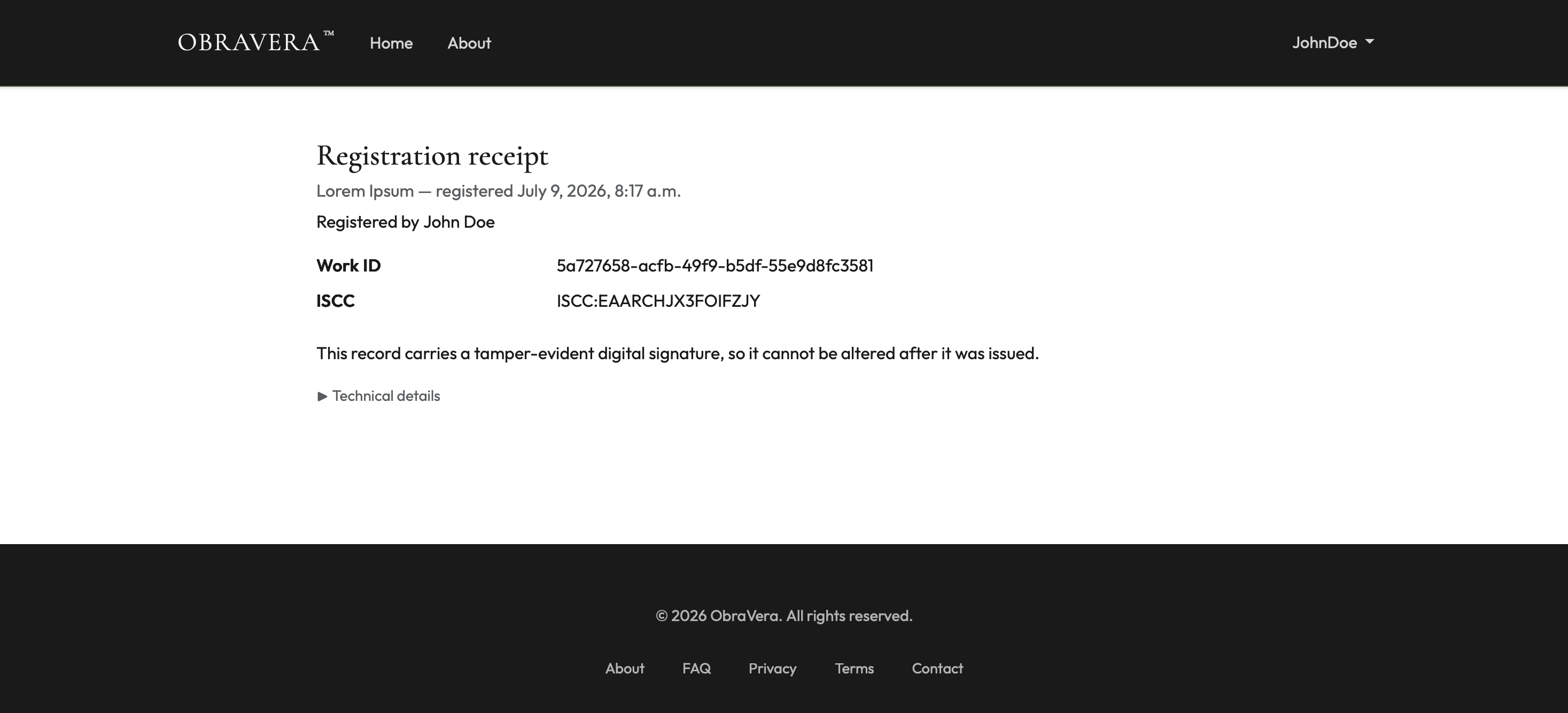
ObraVera is a content provenance platform that gives creators an independent, verifiable record of their work. Creators register a work free of charge and receive a cryptographically signed receipt, built on the ISCC content identifier standard (ISO 24138), proving the work existed in a specific form on a specific date. ObraVera operates as verification infrastructure beneath existing attestation and licensing schemes rather than competing with them. It supports text at launch, with audio to follow. ObraVera is a Contributor member of the C2PA and is based in Aude, France.
Founder
Brady Ridgway is the founder of ObraVera and a self-published novelist. His own novel, Elements of Risk, was the first work registered on ObraVera.
Fact sheet
- Launched July 2026
- Free registration for all creators
- Text at launch, audio next
- ISCC content identifier (ISO 24138)
- Ed25519-signed registry evidence
- C2PA Contributor member
- Content Authenticity Initiative (CAI) affiliation
- Based near Carcassonne, France
Frequently asked questions
Is ObraVera an AI detector?
No. ObraVera cannot tell you whether a text was written by a human or a machine, and we don't believe any tool can do that reliably. What ObraVera does is different: it proves that a specific work existed in a specific form on a specific date, and it can find where registered works appear in AI outputs and in disclosed, auditable datasets.
Does registering prove I wrote my work, or that it's human-authored?
No. Registration proves the state and date of a work, not its authorship or origin. ObraVera does not certify human authorship. Schemes that attest to authorship exist, and ObraVera is designed to sit beneath them as supporting evidence, not to replace them.
Do I need this if I already have copyright?
Copyright is automatic and ObraVera doesn't change or replace it. What ObraVera adds is independent evidence: if you ever need to show what your work contained and when, a signed registration receipt is stronger than a claim.
What does it cost?
Registration is free for all creators and will remain so.
If it's free, how does ObraVera make money?
Registration is free for creators, and will remain so. ObraVera's planned revenue comes from institutions that need verification — publishers, platforms and AI operators — not from creators.
What happens to my work when I register it?
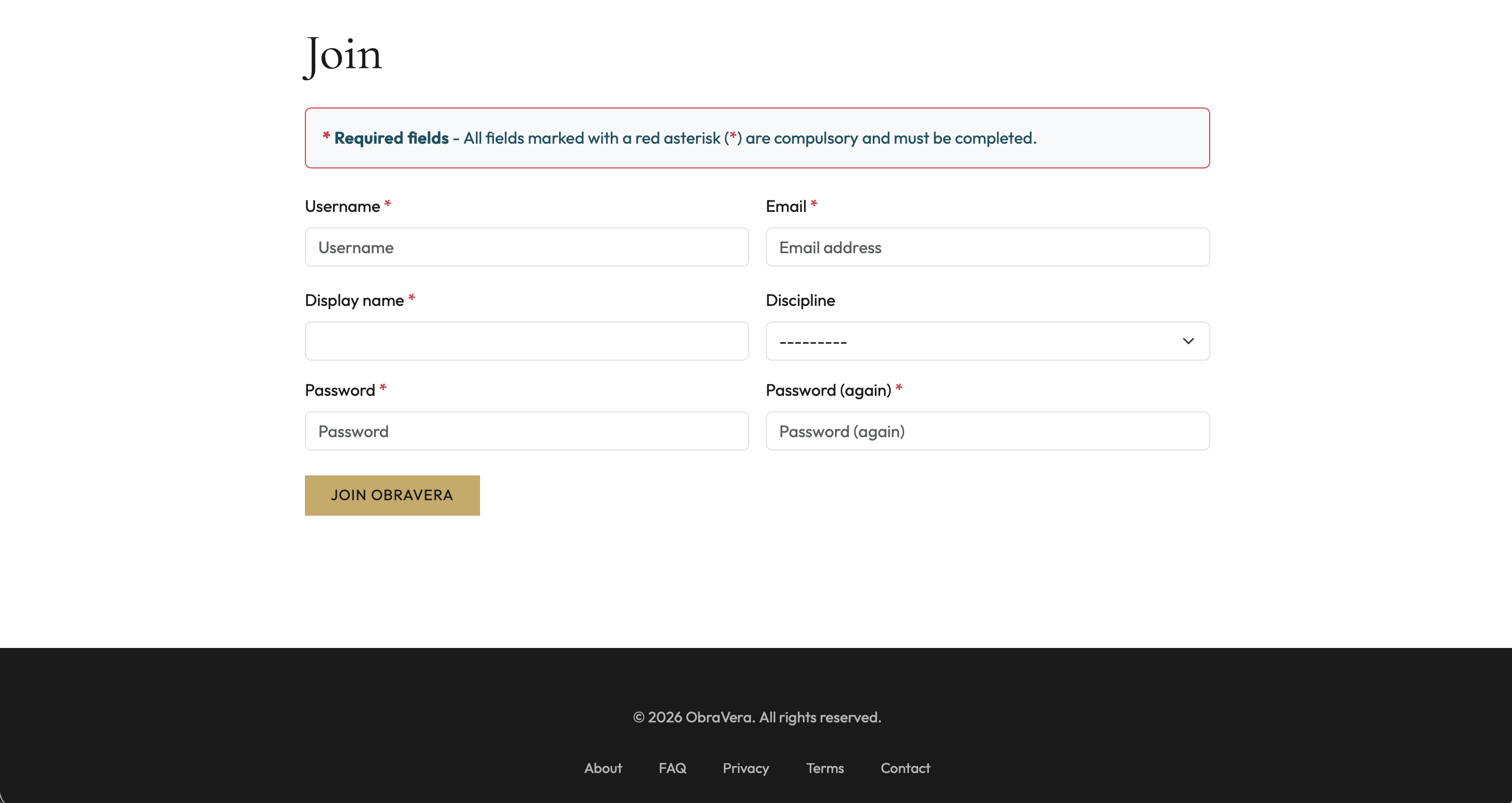
Registration derives a content fingerprint (an ISCC code) and similarity fingerprints from your work and signs a record of them. ObraVera does not retain the full text of your work — only these derivatives are stored. See our privacy policy.
What can ObraVera find, and where?
ObraVera matches registered works against AI outputs and against datasets that are disclosed and auditable. It cannot see inside undisclosed training pipelines, and we won't claim otherwise. If a work carries no registration or watermark, that absence tells you nothing about its origin.
What formats are supported?
Text at launch. Audio is next, using forward watermarking — meaning it protects audio from the point of registration onwards, not retrospectively.
Why does this matter now?
From 2 August 2026, transparency obligations under Article 50 of the EU AI Act take effect for generative AI systems. Transparency obligations are only enforceable if there's an independent way to verify claims against them — that verification layer is what ObraVera exists to provide.
Who is behind ObraVera?
ObraVera was founded by Brady Ridgway, a self-published novelist based in southern France, and is a Contributor member of the C2PA with Content Authenticity Initiative affiliation.
Press assets
Last updated: 20 July 2026